Mirko Tobias Schäfer / Assistant Professor
University of Utrecht Department for Media and Culture Studies

Mirko Tobias Schäfer / Assistant Professor
University of Utrecht Department for Media and Culture Studies
1/11 Previous Next
As we are gradually coming out of this lock-down, it is time to look back on how the COVID-19 crisis has affected our work at Utrecht Data School (UDS) so far, and what we learned from it. It has been a challenging, but also a fascinating experience. And we noticed that the crisis also provides many opportunities. The following post is a summary of what we have learned on the way.
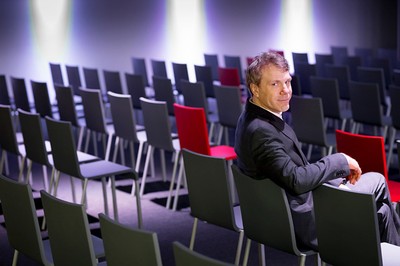
“Data and algorithms offer many possibilities, but they are not neutral. What you analyse, which algorithms you build, the data you use and what for, these are political and ethical choices. Policy makers are insufficiently aware of this. Furthermore, basic knowledge of data literacy is absolutely necessary for local politicians.” That’s what the Dutch data expert Mirko Tobias Schäfer says in this interview with Bart Van Moerkerke for magazine Lokaal and the Association of Flamish Cities and Municipalities.
Date April 2019 / Category News
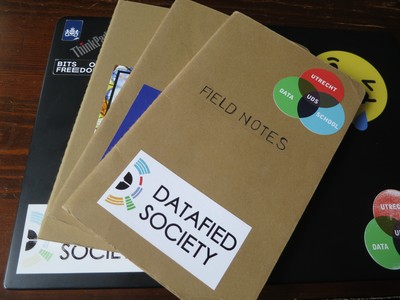
Over the past years we have developed Utrecht Data School as a platform for teaching digital methods and data analysis. Working together with societal partners fundamentally shaped our method and affects our day-to-day work. This post is part of my field notes on developing entrepreneurial research and investigating datafication.
Date March 2018 / Category News
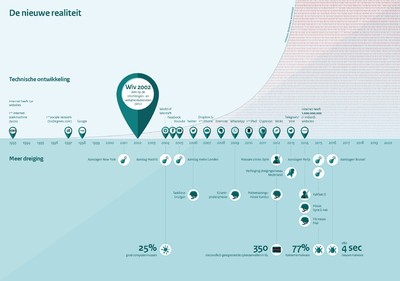
As the campaign for the referendum on the so-called dragnet (sleepwet), the law for the intelligence and security services, is in full swing, it might be worth to have a look at the infographic used by the government to communicate the need for the amended law.
Date November 2016 / Category News

The Institute for Cultural Inquiry (ICON) in cooperation with Utrecht Data School (UDS) is organizing a workshop on Research Ethics for Data and Digital Methods. The workshop will take place on 29 th of November 2016 in the Sweelinckzaal from 10a.m - 5p.m.

For our seminar Markets and Corporations in the Open Society, I wrote an article about how social media platforms transform the political debate. Policy makers and journalists often blame social media for disseminating fake news, spreading hate speech, manipulating audiences and creating filter bubbles. However, this techno-determinist view neglects user practices and the role of mainstream media in amplifying social media messages. This article shows why most policy efforts currently underway are ill-informed and will rather limit freedom of speech and access to information.
The article will be part of an edited volume that is about to be published in September at Boom. The book launch will take place during the IOS Toogdag on 12 September.

Work at Utrecht Data School and Datafied Society is most often a team effort. Our practices require collaboration between team members with different backgrounds and expertise. However, incentives for academic excellence in the humanities are almost exclusively tailored to reward individual performance of singular scholars. While this system has its merits, it certainly has limits. Our research on datafication taught us that as a team we can achieve together what none of us could have done alone. A post on teamwork, blurring disciplines and fading boundaries between academia and societal sectors.
Date November 2018 / Category News
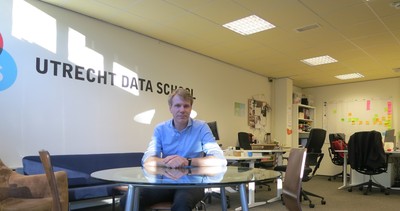
Eef Masson and Karin van Es interviewed me for their special issue Big Data Histories in the Journal for Media History TMG (Tijdschrift voor Mediageschiedenis).
Date October 2017 / Category News
For AoIR 2017, Helen Kennedy put together a panel discussing the future directions of critical data studies. I was fortunate to have had the opportunity to participate in the debate. Round-table participants for the future directions of Critical Data Studies included Lina Dencik (Data Justice Lab), Tarleton Gillespie (Microsoft Research), and Stefania Milan (Data-Active). As Jonathan Gray (Public Data Lab) could not attend, I presented on behalf of Utrecht Data School and the Datafied Society Research platform.

The Journal Computer Supported Cooperative Work approached me to put together a special issue on the impact of social media and big data on citizenship. The journal consists of five papers. Using different examples from medicine, urban space, journalism and blogs, these papers reflect on how social media and emerging data practices affect our understanding of citizenship. The fifth paper proposes a model for researching shared issues in the public sphere.